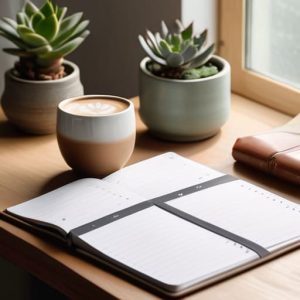
If you’re anything like me, you probably spent the last week of December staring at a pristine, blank planner and feeling a weird mix of intense motivation and absolute dread. We’ve all been sold this lie that goal setting for the new year requires a complete personality transplant or a $50 productivity journal that looks better on Instagram than it actually works in real life. I used to be the queen of this—I’d sit in my tiny NYC apartment, surrounded by color-coded spreadsheets and enough “vision board” supplies to start a craft store, only to abandon my entire life’s roadmap by February 1st. It was exhausting, and honestly, it was a total waste of energy.
I’m done with the overhaul culture, and I think you should be too. Instead of trying to reinvent yourself overnight, I want to show you how to use tiny, manageable shifts to actually make progress without the burnout. I’m going to share the exact, no-nonsense frameworks I use to stay organized while keeping my sanity intact. We aren’t chasing perfection here; we are chasing sustainable wins that actually stick when life inevitably gets messy.
Table of Contents
Mastering the Smart Goals Framework With a Smile

Now, I know what you’re thinking: “SMART goals? Isn’t that just corporate speak?” I used to think the exact same thing back when I was grinding away in consulting. But honestly, once I started applying the SMART goals framework to my own life, everything changed. Instead of a vague, intimidating wish like “I want to be healthier,” I started aiming for something like “I will meal prep three lunches every Sunday afternoon.” It turns a mountain into a series of small, walkable hills.
The secret sauce here is specificity. When your objectives are clear, you aren’t just guessing; you’re executing. I’ve found that using these productivity planning techniques helps me avoid that dreaded mid-February slump. By breaking my big visions down into measurable chunks, I can actually see my progress on my color-coded spreadsheets (yes, I’m that person!). This isn’t about being a robot; it’s about creating a roadmap that actually works with your real, messy, beautiful life, ensuring you stay motivated instead of feeling overwhelmed.
Simple Productivity Planning Techniques for Busy Days

Now, let’s talk about the actual “how” of getting things done when your calendar looks like a game of Tetris gone wrong. I used to think productivity meant working twelve hours straight, but my corporate consulting days taught me otherwise. One of my favorite productivity planning techniques is “Time Blocking.” Instead of a never-ending to-do list that just stares at you judgmentally, assign specific chunks of time to specific tasks. I even use a color-coded system in my digital planner—blue for deep work, green for errands, and yellow for “me time.” It turns a chaotic day into a manageable roadmap.
If you find yourself feeling overwhelmed by the sheer scale of your ambitions, try breaking things down into smaller bites. This is where quarterly goal tracking becomes your best friend. Rather than staring at a massive mountain, just look at the next three months. It makes the process feel much less daunting and helps in overcoming resolution burnout before it even starts. Remember, we aren’t aiming for perfection; we’re just aiming for progress, one tiny, scheduled block at a time.
5 Low-Stress Ways to Keep Your Goals on Track (Without the Burnout)
- Audit your “Why” before your “What.” I used to jump into new habits just because they looked cool on Pinterest, but if the motivation isn’t rooted in something that actually makes your life easier, you’ll drop it by February. Ask yourself: “Will this goal actually bring me more peace or just more clutter?”
- Build a “Habit Stack” to make things stick. Instead of trying to conjure willpower out of thin air, anchor your new goal to something you already do. If you want to start a morning journaling habit, do it right after you pour your first cup of coffee. It’s like adding a new spice to a recipe you already know by heart—it just blends right in.
- Create a “Done” list instead of just a “To-Do” list. We are all so obsessed with what’s left to do that we forget to celebrate what we’ve actually crushed. At the end of each day, jot down three small wins. It keeps the momentum high and prevents that dreaded mid-month slump.
- Designate a “Pivot Day” once a month. Life happens—I’ve had weeks where my color-coded spreadsheets went completely out the window because of a sudden deadline or a kitchen experiment gone wrong. Instead of feeling like a failure, use one day a month to look at your goals and adjust them to fit your current reality.
- Visual cues are your best friend. If you want to drink more water, put a bright reusable bottle on your desk. If you want to read more, put that book on your pillow. I’m a huge believer in “out of sight, out of mind,” so if you want to succeed, make your goals impossible to ignore.
My Cheat Sheet for a Stress-Free Year
Ditch the “all or nothing” mindset; focus on tiny, incremental shifts that actually stick rather than massive overhauls that lead to burnout.
Use your tools (like those color-coded spreadsheets I love so much!) to visualize progress, making your goals feel real and achievable.
Be kind to yourself when life gets messy—productivity isn’t about perfection, it’s about finding your rhythm and staying flexible.
My Golden Rule for January
“Forget about the massive, intimidating transformations you see on social media; real progress isn’t about a total life overhaul, it’s about those tiny, color-coded wins that actually make you feel like you’re winning at life, one small habit at a time.”
Emily Carter
Finding Your Rhythm in the New Year

As we wrap this up, I want you to take a deep breath and look back at everything we’ve covered. We’ve moved from the structured world of SMART goals to finding those tiny, manageable productivity hacks that actually fit into a chaotic Tuesday. Remember, the goal isn’t to build a rigid, unbreakable system that leaves you feeling exhausted by February. Instead, it’s about using these tools—like smart frameworks and simplified planning—to create a life that feels intentional rather than reactive. Whether you’re color-coding a new budget or just trying to carve out ten minutes for a morning coffee without checking your email, you are already building momentum.
At the end of the day, please be kind to yourself. There will be weeks where your spreadsheets fall apart and your plans go completely out the window, and honestly? That is perfectly okay. Life is messy, and sometimes the most productive thing you can do is pivot and try again tomorrow. Don’t let the pursuit of “perfect” rob you of the joy of making progress. I truly believe that these small, consistent shifts are what lead to that beautiful sense of balance we’re all chasing. So, grab your favorite notebook, pick one tiny thing to focus on, and let’s make this year wonderful together.
Frequently Asked Questions
What do I do if I start strong but completely lose momentum by February?
Oh, the dreaded February slump! Believe me, I’ve been there—usually right around the time my color-coded January planner starts looking more like a work of fiction. When that momentum dips, don’t scrap everything. Instead, pivot. Shrink your goals. If your “run five miles” goal feels impossible, just aim for a ten-minute walk. It’s about keeping the pilot light on so you don’t have to restart the whole fire from scratch.
How can I set goals that actually help my mental health instead of just adding more stress to my plate?
Honestly, I used to be the queen of over-scheduling myself until I hit a major wall of burnout. The secret? Stop treating your goals like a relentless to-do list and start viewing them as boundaries. Instead of “Work 10 hours a day,” try “Protect my lunch break for a 15-minute walk.” If a goal feels like a heavy weight rather than a stepping stone, it’s probably not serving your well-being. Let’s aim for progress, not perfection.
Is it better to focus on one big "life goal" or a bunch of tiny, different habits at once?
Honestly? I’m a huge advocate for the “tiny habits” approach. I know, I know—it’s tempting to aim for that one massive, life-altering goal, but those can feel pretty overwhelming when life gets messy. I’ve found that stacking small, manageable wins actually builds the momentum you need to tackle the big stuff later. Think of it like my color-coded spreadsheets: one tiny cell at a time eventually builds the whole masterpiece!